

How Long Does a CBD Cigarette Stay in Your System? (Complete 2026 Guide)
How Long Does a CBD Cigarette Stay in Your System? (Complete 2026 Guide)
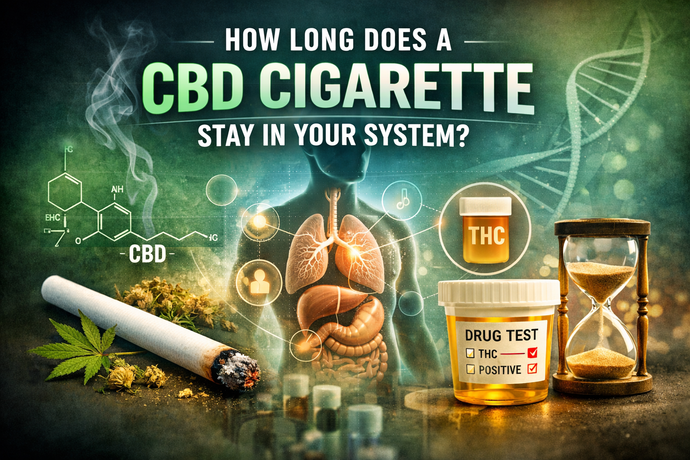
Short Answer: A CBD cigarette can stay in your system for several days, depending on frequency of use, metabolism, and individual biology. CBD itself may remain for 2–7 days, while trace THC—if present—typically clears faster but can vary by person and test type.
How Long Does a CBD Cigarette Stay in Your System?
With the rising popularity of CBD cigarettes, many consumers want to understand how long cannabinoids like CBD and trace THC stay detectable in the body. Unlike traditional tobacco cigarettes, CBD cigarettes are made from hemp flower high in cannabidiol (CBD) and low in THC, creating vastly different metabolic and detection timelines.
In this article, we break down the science behind cannabinoid metabolism, how long CBD cigarettes’ compounds remain in your system, and important considerations for anyone concerned about drug tests or detection. Learn why CBD cigarettes have THC in them here.
What Happens When You Smoke CBD Cigarettes?
Smoking a CBD cigarette delivers cannabinoids directly into the bloodstream through the lungs. This route provides fast uptake (often within minutes) and quicker elimination compared with oral ingestion.
CBD is a lipophilic compound — meaning it tends to be stored temporarily in fatty tissues before being metabolized and cleared. Studies on inhaled CBD indicate it is rapidly distributed into organs and adipose tissue after absorption.
CBD Metabolism & How Long CBD Stays in Your System
Half-Life of CBD
Scientific research shows that CBD’s elimination half-life (the time it takes for half the compound to be removed from your bloodstream) varies widely depending on delivery method:
-
Inhaled CBD has an approximate half-life of around 31 hours for smoking/vaping.
-
Orally administered CBD shows a range from about 18 to 32 hours or longer, depending on study methods and individual differences.
Most estimates suggest that CBD can be detectable in the body for several days after use, often up to 3–7 days for occasional inhaled consumption.
Because CBD is not typically screened for in standard drug tests, its detection window is more academic than practical. However, metabolic persistence varies from person to person.
Click here to learn more about how CBD affects you.
Breaking Down THC in CBD Cigarettes
Hemp-derived CBD cigarettes contain inherently very low amounts of THC — the psychoactive cannabinoid that drug tests actually screen for. A carton-to-stick measurement might typically work like this:
-
Carton weight: ~0.624 lb (≈283.5 g of hemp flower)
-
Total THC at 0.03% concentration: ≈85 mg in the whole carton
-
THC per pack (20 sticks): ~8.5 mg
-
THC per stick: ~0.425 mg
These trace amounts are far lower than the THC quantities generally associated with intoxication or detection via standard drug panels but presence does not guarantee absence in every individual.
How Long THC (from CBD Cigarettes) Stays in Your System
Standard drug screens do not test for CBD — they look for THC metabolites, specifically THC-COOH. These metabolites form when the liver breaks down THC.
THC metabolite detection windows vary widely depending on the test type:
-
Blood: up to a few hours to a couple of days after exposure in occasional use.
-
Saliva: about 24–72 hours.
-
Urine: typically 3–15 days for infrequent users, up to several weeks in frequent users.
-
Hair: may detect metabolites up to 90 days.
Because the amount of THC in compliant CBD cigarettes is extremely low, detection in these tests is less likely compared with regular marijuana use — but the risk isn’t zero, especially with repeated daily use.
Important PSA About CBD Cigarettes and Drug Testing
Every person metabolizes compounds differently based on factors such as:
-
Metabolism speed
-
Body composition and fat %
-
Frequency of use
-
Hydration levels
-
Liver enzyme activity
Trace THC from CBD cigarettes may accumulate slightly with frequent use and could, in rare cases, contribute to a positive drug test result depending on test sensitivity. If you are subject to regular or strict drug testing, you should avoid smoking CBD cigarettes, CBD pre-rolls, or CBD flower altogether. No smokable hemp product can offer a guaranteed zero-risk profile for THC detection.
Other Cannabinoids in CBD Cigarettes
Whole-plant hemp used in CBD cigarettes may also contain minor cannabinoids, including:
-
CBG (Cannabigerol)
-
CBC (Cannabichromene)
-
CBN (Cannabinol)
-
D8 THC (Delta-8 Tetrahydrocannabinol)
- THCA (Tetrahydrocannabinolic Acid)
These compounds are present in small amounts and have similar lipophilic properties to CBD & THC, meaning they are absorbed and processed similarly, but they are not targeted by standard drug tests. Research findings have shown that co-administration of CBD does not significantly alter THC metabolite clearance rates.
Factors That Influence How Long Cannabinoids Stay in Your System
Several biological and behavioral factors affect detection windows:
-
Frequency & dose of use
-
Body fat percentage
-
Metabolic rate
-
Hydration levels
-
Overall health & liver function
Smoking delivers cannabinoids more quickly than oral consumption, and also typically clears faster because it bypasses first-pass metabolism in the liver.
CBD Cigarettes vs Other CBD Products (Detection Comparison)
| CBD Product Type | Onset | Detection Duration |
|---|---|---|
| CBD cigarettes | Minutes | Days |
| CBD vape | Minutes | Days |
| CBD oils & tinctures | 30–90 min | Days |
| CBD edibles | 1–2 hrs | Days to week+ |
Because inhaled cannabinoids enter the bloodstream faster and are metabolized quicker, CBD cigarettes tend to clear out sooner than many oral products.
CBD Cigarettes vs Other Cannabis Products: Metabolism & Accumulation Comparison
| Product Type | How It Enters the Body | Cannabinoid Accumulation Risk | Time Until Most Cannabinoids Clear* | Drug Test Considerations |
|---|---|---|---|---|
| CBD cigarettes | Inhalation (lungs → bloodstream) | Low–moderate with frequent use | 1–7 days | Trace THC may accumulate with repeated use |
| CBD vape products | Inhalation | Low–moderate | 1–7 days | Similar risk profile to CBD cigarettes |
| CBD flower (non-cigarette) | Inhalation | Low–moderate | 1–7 days | Depends on frequency and THC content |
| CBD oils & tinctures | Oral (sublingual/digestion) | Moderate | 3–10 days | Slower clearance than inhaled products |
| CBD edibles | Oral (digestion → liver) | Higher | 5–14 days | Highest accumulation risk among CBD forms |
| Marijuana (high THC) | Inhalation/oral | High | Weeks+ | High likelihood of positive drug test |
*Clearance times vary by metabolism, frequency of use, and individual biology.
FAQs About CBD Cigarette Detection Times
Does a CBD cigarette show up on a drug test?
Standard drug tests don’t look for CBD, but trace THC can be detected depending on use frequency and test sensitivity. For more info, click here.
Will daily CBD cigarette use increase detection risk?
Repeated exposure can slightly increase metabolite accumulation, potentially elevating detection chance. For more info, click here.
Do CBD cigarettes have an expiration date?
Roughly 2 years from manufacturing date. For more info, click here.
Can CBD convert to THC in the body?
No credible research supports biologically converting CBD into THC inside the body. For more info, click here.
How long after use might a test detect THC?
Depending on test type and individual factors, between a few days up to several weeks. For more info, click here.
Final Answer: How Long Does a CBD Cigarette Stay in Your System?
Cannabinoids from smoking CBD cigarettes enter the bloodstream quickly and are generally cleared from blood within days. CBD itself may stay detectable for a few days, but because standard tests focus on THC metabolites — not CBD — the primary concern is trace THC from hemp. While low doses make detection unlikely for most occasional users, individual metabolism and frequent use can increase risk, especially when drug testing is a requirement.
Understanding the science helps consumers make informed decisions about CBD cigarettes, cannabinoid metabolism, and personal detection timelines.
How This Information Was Researched
This article is based on peer-reviewed pharmacokinetic research, government guidance on hemp compliance, and established medical literature on cannabinoid metabolism. Sources include Healthline, NIH-hosted studies, and medical publications.
SUGGESTED ARTICLES
-
Broad Spectrum vs Full Spectrum CBD: What the Entourage Effect Research Actually Shows
-

What Do Hemp Wraps Taste Like? A Real Flavor Breakdown
-
Are Hemp Cigarettes the Same as CBD Cigarettes? A Complete Breakdown
-

Can You Smoke CBD in Public in California?
-

Can You Smoke CBD in Texas? – A Clear Guide to the Laws (2026)
-

日本でCBDは吸える?CBDタバコとCBDスモークの法律を解説
-


Can You Smoke CBD in Japan? Laws, Risks, and What Travelers Should Know
-


Does Smoking Hemp Make You Poop? The Science Explained
-

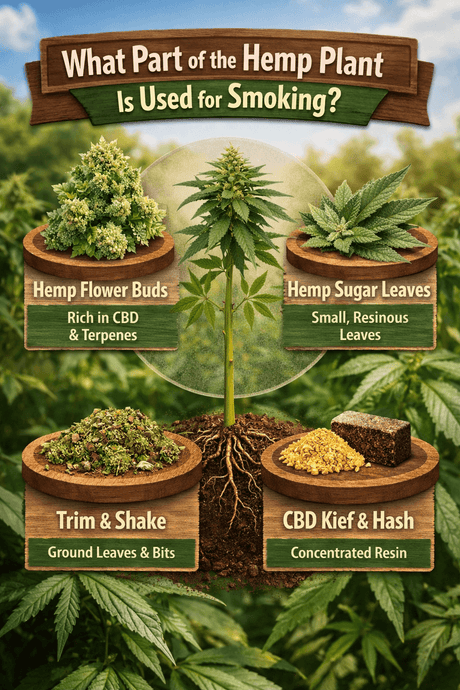
What Part of the Hemp Plant Is Used for Smoking?
-

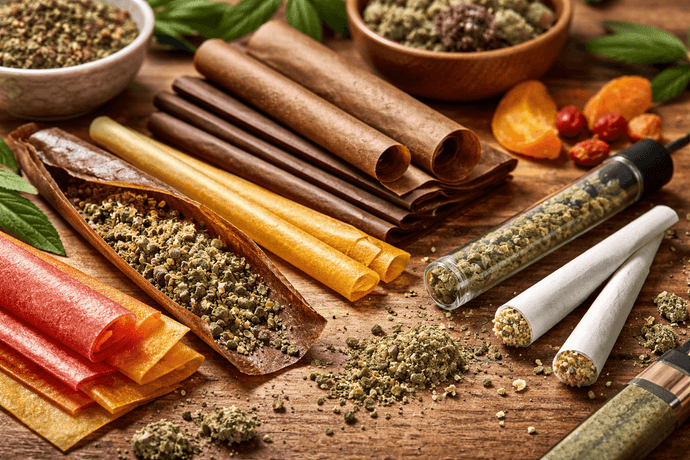
What Can I Use to Roll a Blunt Without Wraps? (Real Alternatives, Ranked)
-
What Is a Hemp Wrap? (Simple Definition, Uses, and Differences Explained)
-
How Long Does a CBD Cigarette Stay in Your System? (Complete 2026 Guide)
-

The History of Smoking Hemp Flower
-
Do Hemp Cigarettes Burn the Same as Tobacco Cigarettes?
-
How Trump’s Tariffs Affect the Hemp, CBD & Cannabis Industry
-
Is Hemp the Most American Plant on the Planet?
-


Is It Possible to Get High Off the Leaves of the Marijuana Plant?
-
The Best Slow Burning Marijuana Hemp Leaf Wraps: Wild Hemp Wraps
-


Best Hemp Wraps in Oklahoma!
-

Can CDL Drivers Smoke CBD?
-


What is the Difference Between CBD and Kava?
-
Smoking Hemp vs. Smoking Crack Cocaine (Similarities & Differences)
-
Do Hemp Wraps Get You More High? Exploring the Truth Behind the Buzz
-

How Much Are Blunt Wraps? Tobacco vs. Hemp Wraps Price
-


How to Wrap a Blunt with Concentrate: A Step-by-Step Guide to Rolling Like a Pro
-

What Do Hemp Wraps Contain?
-


The Top 12 Most Popular Smokable Herbs
-
Smoking Mullein vs. Hemp Cigarettes: Key Differences and Insights
-


Are CBD Gummies More Expensive Than CBD Vapes?
-

Are Hemp Wraps Better than Rolling Papers?
-


The Science of Laughter: Why Cannabis Makes You Giggle
-


Hemp Wraps vs. Tobacco Wraps: A Comprehensive Comparison
-


Discreetly Relaxing: A Parent's Guide to Using CBD Undetected
-


Is It Safe to Use CBD Before a Job Interview?
-

Is Vaping Weed Better Than Smoking It With A Blunt?
-


How To Hide Weed's Smell
-
How to Roll the Perfect Blunt (For Beginners)
-

Can Kids or Teenagers Safely Eat CBD Gummies?
-


Should You Store Your Hemp Wraps in the Fridge or Freezer?
-


What is the Best CBD Gummy Dosage for Beginners?
-


Are hemp rolling papers better for the environments?
-
Maximize Your Vaping Experience With THC Free CBD Vapes
-
Understanding the Effects of Smoking CBD: How Does It Affect You?
-
Exploring the Different High CBD Strains and Their Effects
-
Understanding Lemon Cherry Gelato Strain: A Detailed Guide
-
Strawberry Cough Strain: Everything You Need to Know
-
Know More About the Pineapple Express Strain: The Complete Guide
-
Can you Vape CBD Oil? What You Need to Know
-
Exploring the Trend: Can You Smoke CBD Oil?
-
Can You Smoke CBD Oil From A Bowl? Exploring the Method


